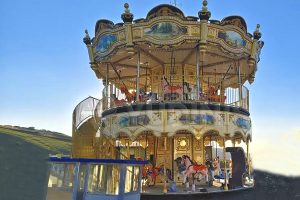
How Should Operators Plan Passenger Flow Around a 68-Seat Double Deck Carousel?
 dinomc
A 68-seat double deck carousel can serve over a thousand guests an hour, but only when the area around it is designed to absorb them. Boarding, alighting, photographing, and walking past all compete for the same ground. This article explains how to plan passenger flow around a 68-seat carousel so the ride delivers its capacity instead of creating queues.
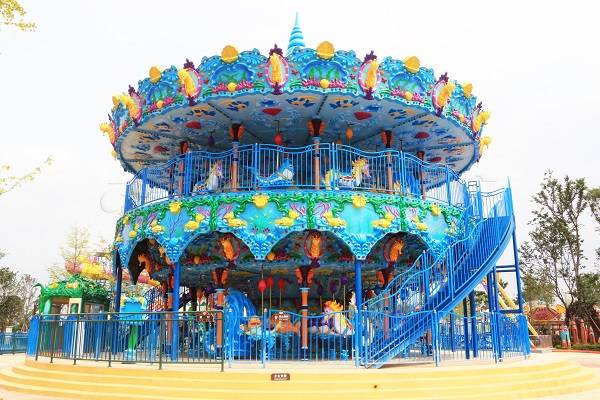
Separate Arrival, Boarding, and Exit Routes
Three movements must never cross: guests arriving to queue, guests boarding, and guests leaving the platform. Provide a clearly marked entrance and a separate exit, and position staff where they can direct families to the correct level. Clear routing is more valuable than extra seats, because it shortens every cycle and keeps the queue moving.
Design Two-Level Boarding Carefully
On a double deck carousel, the ground level and the upper deck are loaded simultaneously, so the two streams must merge without conflict at the entrance. Use separate queue lanes, clear level indicators, and, where possible, an upper-level ramp that does not cross the main boarding area. Trained attendants can then load both levels within the same interval. Good carousel queue management depends on this discipline at the entrance.
Size the Queue for the Peak Hour
Estimate the riders expected in your busiest hour, then check that the queue can hold them comfortably with shade, seating, and visible entertainment. A queue that spills into the main path slows everyone, including guests who never ride. Where demand consistently exceeds capacity, a timed-entry option or extended operating hours spread the load more effectively than widening the queue.
Keep the Safety Zone Clear
The dynamic envelope and safety clearance around a large carousel must remain free of seating, signage, promotional stands, and photographers. Design a separate circulation path so visitors can pass without entering the queue area, and confirm that emergency exits are kept clear whenever temporary displays are installed.
Practical Layout Lessons from Smaller Models
Operators moving up from a smaller ride often underestimate the space required. Reviewing the layout of a 72 seat single level carousel helps to compare boarding widths, queue volumes, and walking distances before committing to a two-level installation, since single-level models use a simpler circulation pattern.
Measure, Then Adjust
During the first weeks, track cycle times, queue length, and complaints at peak periods. If the queue repeatedly fills, adjust pre-boarding gates, add an attendant, or move the ticket point. Small operational changes usually raise throughput more than structural alterations, and they can be implemented in days rather than months. Keep a simple daily log of dispatch intervals, queue length, and the number of guests turned away, because those three figures show immediately whether the layout or the staffing pattern needs attention. Parks that review the data weekly during their first season typically gain several hundred extra rides per day without any change to the ride itself.
Planning passenger flow is about separating movements, sizing the queue correctly, and keeping circulation paths outside the ride zone. Work with an experienced Dinis carousel maker China that supplies clearance and boarding drawings for each model, and review general carousel operation practice when setting your procedures. To discuss models and layouts, visit https://www.carouselmanufacturer.com/product/68-people-double-decker-carousel/.