What Are the Key Differences Between Fixed and Portable Ferris Wheels for Commercial Buyers?
 dinomc
Commercial buyers usually start a Ferris wheel enquiry with a height and a budget, then discover that the more consequential question is whether the wheel has to move. A fixed wheel and a portable wheel do the same job for visitors, but they are different products with different foundations, different transport arrangements and different economics.
This article sets out the practical differences so the choice is made deliberately rather than by default. Buyers who already know which type they need can compare specifications on this Ferris wheel for sale page.
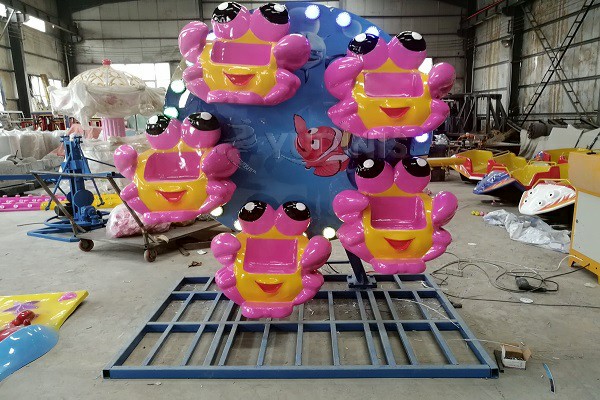
Foundations and Site Preparation
The clearest difference is what happens below ground. A fixed wheel is designed around a permanent reinforced concrete foundation sized for its loads, and the structure is usually bolted to that base for its whole service life. Site preparation is a civil engineering exercise, and the wheel cannot be relocated without building a new foundation.
A portable wheel spreads its loads differently. It stands on a steel base frame, often with ballast or outrigger pads, and is designed to be assembled and dismantled repeatedly. Ground preparation is limited to a level, firm surface, but the surface still has to carry the loads - a portable wheel is not a light structure, only a removable one.
Assembly, Transport and Operating Cycle
A portable wheel earns its name at the transport stage. It is designed to fit into standard containers or onto trailers, and the structure is broken into sections that a trained crew can lift with the equipment normally available to a travelling operator. Assembly and dismantling times are quoted in days, and the number of crew required is part of the specification.
A fixed wheel is transported too, but only once. After installation it is not built to be taken apart repeatedly, and the savings show up in the structure rather than in the logistics: fewer joints, fewer lifting points and a simpler maintenance regime over a long service life.
Service Life and Maintenance
Permanent installations are usually specified for a long service life with a documented inspection programme, periodic repainting or recoating, and a defined replacement schedule for drive and control components. The structure becomes part of the site's fixed assets.
A travelling wheel lives a harder life. Frequent assembly stresses connections, transport damages finishes, and the annual inspection burden is higher because the structure is repeatedly erected and struck. Buyers choosing a portable Ferris wheel for sale option should ask for the design life and the inspection regime that goes with it.
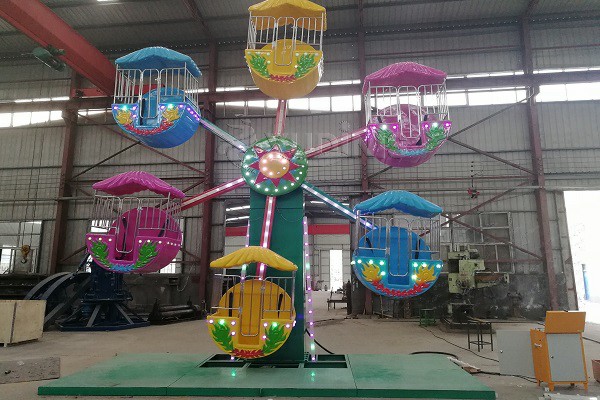
Wind, Weather and Operating Limits
Both types have wind limits, and in both cases the limit is set by the design rather than by the operator's judgement. Permanent wheels in exposed locations are designed for higher wind speeds because the foundation and the structure can be sized for them. Portable wheels strike a different balance: they must be light enough to move and stable enough to operate safely, which usually means stopping operation earlier as wind rises.
Confirm the design wind speed, the operational limit and the procedure for securing the wheel out of service. On a coastal or open site these three numbers can decide whether a portable wheel is suitable at all.
The Commercial Difference
A fixed wheel is a destination asset. It is marketed with the site, it justifies premium tickets at night, and its cost is recovered over years rather than seasons.
A portable wheel is a revenue tool that follows the audience. It suits operators working fairs, festivals and seasonal events, and buyers who expect to move the wheel between locations. The trade-off is that it will never be as cheap to operate as a permanent installation, and it will never look as permanent to a municipal client assessing a landmark project.
Questions to Settle Before Ordering
- Will the wheel stay in one location for its whole life, or move more than once?
- What foundation or base does each option require, and who designs it?
- How many containers, and what crane capacity, does transport require?
- What are the design wind speed and the operational wind limit?
- What assembly and dismantling time, and how many crew, does each option need?
- What is the design service life, and what inspection regime applies?
Buyers comparing a fixed Ferris wheel for sale specification with a portable one should also confirm what the price includes: drawings, cabins, lighting, drive and control system, packing and installation supervision. Two quotations are only comparable when the scope is the same.
Whichever type is chosen, the structural specification should be written down. Main frames, rim sections and cabin hangers are made in steel with a defined grade and surface protection, and that specification determines how the wheel performs after years of weather, whether it stands permanently or is erected each season.
Dinis builds both permanent and transportable Ferris wheels and works as a Ferris wheel manufacturer for parks, event operators and municipal projects. Tell us whether the wheel will move, how often, and what ground it will stand on, and we will recommend the type that fits the operation. Reference specification: https://www.kidsparksolutions.com/ferris-wheel-for-sale/
