How Much Does It Cost to Build a 5,000 sqm Water Park?
 dinomc
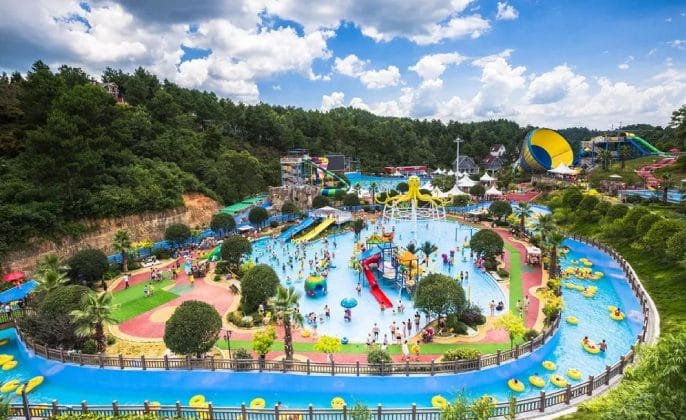
A 5,000 square metre water park is the size at which a project stops being a hotel amenity and becomes a destination in its own right. It supports a wave pool, multiple slide towers, a children's zone and proper food and beverage - but it also multiplies the engineering, staffing and water treatment load. This guide breaks down what a scheme of that size really costs, and where the money concentrates.
A realistic water park construction cost at 5,000 m² normally falls between USD 1.4 million and 3 million for a turnkey project on prepared land, with the attraction package alone accounting for roughly 40 percent. For the wider view of how these numbers scale across park sizes, see our guide to how much does it cost to build a water park. The cost to build a 5,000 sqm water park depends less on the headline ride list than on three structural decisions: the water treatment standard, the balance between fixed and themed structures, and how much of the build is phased.
How the Money Splits at 5,000 m²
| Cost block | Share of budget | What it covers |
|---|---|---|
| Attractions and slide towers | 35 - 45% | Wave pool, racer or raft slides, splash structure, kids zone |
| Pools, civil works and waterproofing | 15 - 22% | Pool shells, tiling, decks, drainage, retaining structures |
| Water treatment and plant room | 12 - 18% | Filtration, disinfection, balance tanks, pumps, pipework |
| Buildings and guest facilities | 12 - 18% | Entrance, changing rooms, lockers, F&B, shade, cabanas |
| Installation, freight and commissioning | 8 - 14% | Shipping, duties, local labour, testing, operator training |
Water treatment is the block that punishes optimism. Health codes in most markets require a full turnover of wave pool water every two to four hours, and that single requirement sets pump size, pipe diameter and the floor area of the plant room. Sizing it once, for the finished park, costs far less than expanding it two seasons later.
The Three Decisions That Move the Budget Most
1. Attraction mix and slide technology
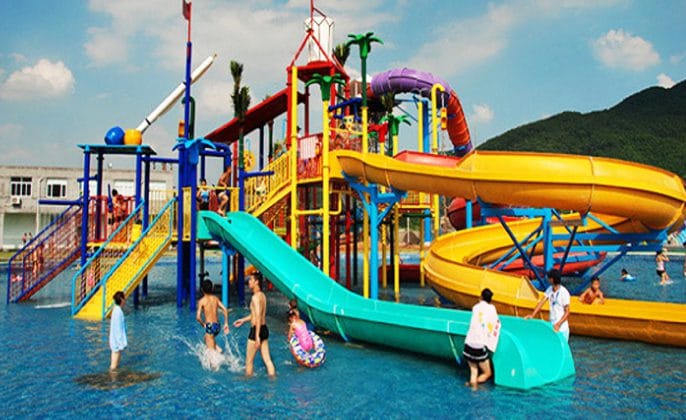
A wave pool is the strongest single attendance driver you can add at this size, and also the most capital-intensive element. Body slides are the cheapest capacity per guest; raft slides cost more but carry higher throughput and appeal to groups. Splash structures with interactive play keep young families on site for hours at very low operating cost, and their shells and play panels are typically produced in FRP, where resin grade and gelcoat thickness decide both price and service life.
2. How much you theme, and with what
Theming is the most controllable line in the budget and the easiest to overspend on. Rockwork, imported feature structures and bespoke joinery can easily add a third to the entrance plaza. Local stone, planting, shade sails and colour-matched paving deliver most of the guest experience for a fraction of the cost, and they age better in strong sun.
3. How you phase the opening
At 5,000 m² phasing is a financing decision as much as a construction one. Opening with the splash zone, leisure pool and one slide tower - roughly half the eventual attraction spend - starts revenue one season earlier and lets the wave pool be funded from proven cash flow rather than additional debt.
Operating Costs Owners Forget to Budget
- Lifeguards. Supervised pools need certified staff on every shift, and the roster scales with the number of water bodies.
- Energy. Filtration and heating run every day, whether or not the park is busy; off-season running costs surprise new operators more than construction costs do.
- Chemicals and consumables. Budget per litre of water treated, not per guest.
- Planned maintenance. Set aside three to five percent of the attraction package each season for pumps, seals, slide surfaces and controls.
Revenue and Payback
A well-run 5,000 m² park in a warm climate typically targets payback in three to five operating seasons. The revenue mix decides whether that happens: day tickets bring visitors, season passes fill weekdays when fixed costs are already paid, and food, drink and shade or cabana rentals lift average spend without a single extra square metre of water. Model the park pessimistically - a site designed for 1,200 guests a day should still cover its costs at 400.
Frequently Asked Questions
How many slides should a 5,000 m² water park have?
Three to five slide experiences plus a splash structure is a realistic balance once circulation, queuing and service access are allowed for. Variety of ride type matters more than raw slide count.
Is a wave pool worth the investment?
Above roughly 4,000 m² of water park area, yes. It is the strongest attendance driver available at this scale, provided the plant room is sized for it from the beginning.
How long does construction take?
Design and permitting typically take three to four months, production of slides and filtration equipment four to eight months, and site installation three to five months depending on weather and scope.
Planning a 5,000 m² Water Park?
Send us the site plan, the target opening date and the guest mix you expect, and we will return a block-by-block estimate based on complete water park solutions from Dinis. As a water park equipment manufacturer working directly with owners, we quote attractions and the plant room together so the budget holds up once construction starts. To see how these cost blocks translate into a real scheme, read more here.